Yalla Falasteen
Revitalization Program
Palaces
The residential construction in old Nablus has been a product of the proficiency of its builders. It is clear that they used their experience to work with local building materials, adapting them to create architectural spaces that serve the needs of the users of the buildings in accordance with their particular social and human needs. In addition, monetary resources were the main determining factor in governing the final form of the construction.
A classification of the Nabulsi Palaces includes the residences of the local governors. During the Ottoman period, they had ruled over the governorates of Palestine. Their buildings had been accomplished according to their architectural importance as well as the social and political relationships of their owners. The residential buildings are distinguished by their architectural style besides their beauty, belonging to the notables and merchants of the city.
The residences of the local governors are of a special importance: the size is distinct. The details of their construction are unique. The ability to defend a home is a distinctive feature.
The other features include internal openness and a very clear separation of the haramlik from the Salāmlik, differing by a storey in height in order to assert the separation of the private from the public sphere.
Another common feature of the entrance area to the house is the large gateway. It is usually surrounded by stone seats or mukassilat. The animal stables are normally nearby as well as places for the guards to sit and rest.
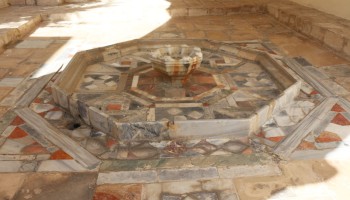
The other parts of the construction are distinguished by Iwāns. They usually overlook the internal yard where there are water fountains and lush gardens laid out to resemble paradise. From the architectural viewpoint, these buildings are artistically creative in the ways the masons have approached the topography of the original site and harmonious use of a geometric design.
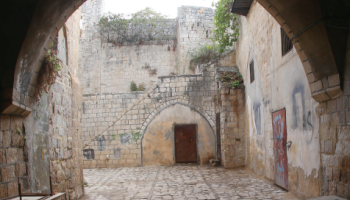
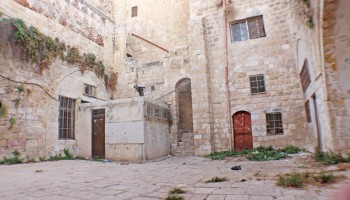
The inner yard is a wonderful example of the traditional architecture in the old city of Nablus. It differs in size in proportion to the area of the house. The factors of location, height above the street and approach are taken into consideration. All these terms had been set in accordance with the specific design of the building.
There had been three indigenous families in Nablus who had possessed these palaces. Each family had owned one of these residential castles: An-Nimr family located in the north -eastern part of the old city; al-Bayk Tūqān in the middle; and abd ar-Rahīm abd al-Hādi in the al-Qaryūn quarter.
It is worth noting that visits to the palaces and the residential buildings require a special permit from their owners. Although visitors are always welcome, they require entry permits which are issued for times when the people living there are free to receive guests.